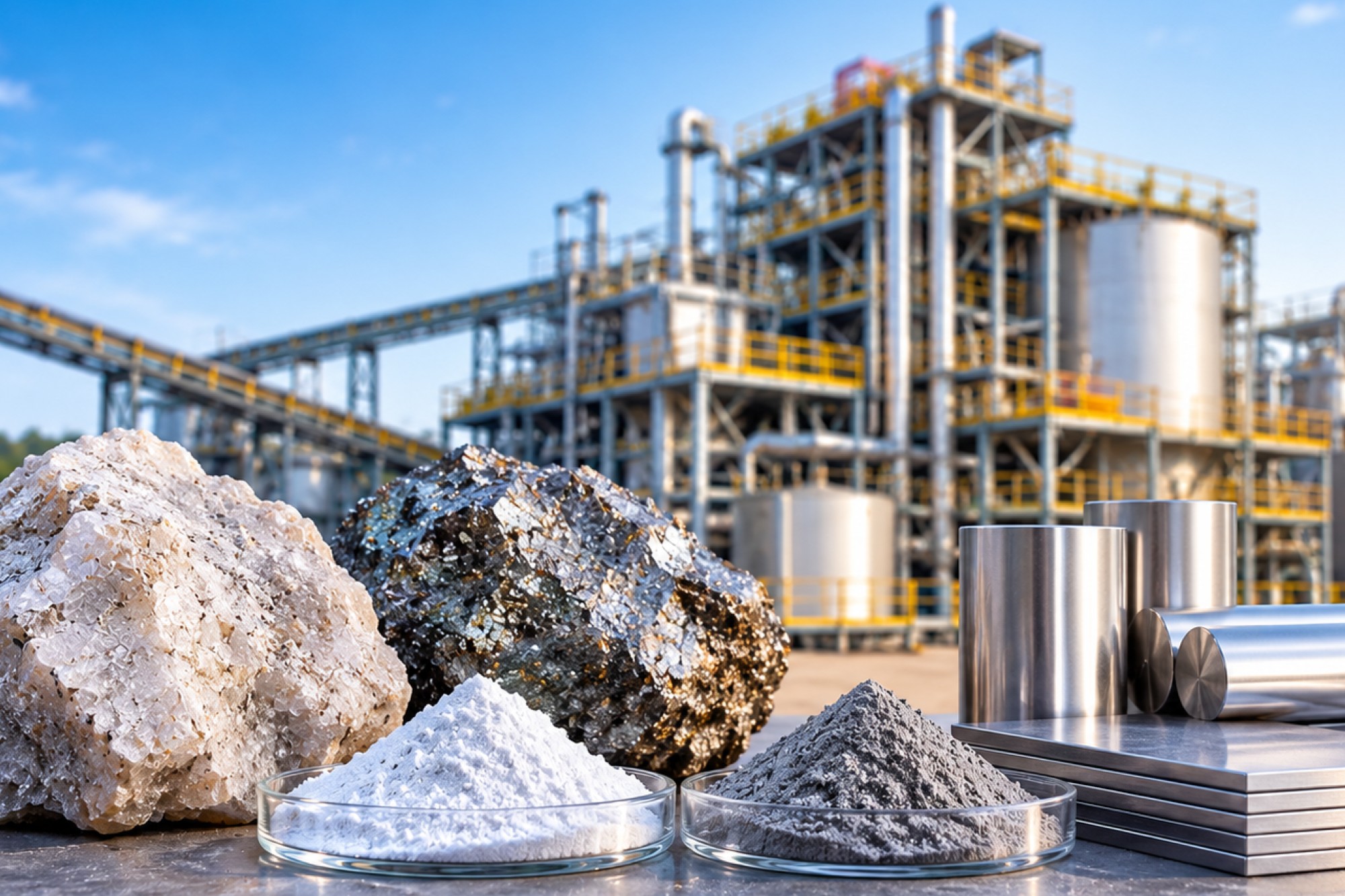
Centre rolls out ₹2,814 crore incentive plan for domestic lithium and nickel processing
By Staff Report 1 November 4, 2026 6:59 pm IST
The Union Cabinet has approved ₹2,814 crore in capital support to establish domestic lithium and nickel processing capacity over five years.
The Union Cabinet has approved the Capex Support Scheme to Promote Critical Mineral Processing, with a financial outlay of ₹2,814 crore over five years from FY 2026–27 to FY 2030–31.
The scheme aims to strengthen India’s domestic critical mineral processing capabilities by supporting the establishment of processing plants for lithium and nickel. It is intended to increase domestic value addition and reduce dependence on imports of refined intermediates and high-purity materials.
Under the scheme, the government will provide a capital subsidy of 30 per cent of eligible investment for setting up four processing plants. These will comprise two lithium processing facilities, each with a minimum capacity of 30 kilotonnes, and two nickel processing facilities, each with a minimum capacity of 50 kilotonnes.
The maximum capital support will be capped at ₹500 crore per beneficiary for lithium processing projects and ₹900 crore per beneficiary for nickel processing projects.
Beneficiary selection and implementation
Companies will be selected through a two-stage process. Applications will first undergo technical evaluation, with only qualified applicants progressing to financial bidding. Two beneficiaries will be selected for each mineral based on the least-cost criterion, giving preference to applicants seeking the lowest capital support.
Financial assistance will be released in three tranches linked to the achievement of specified project milestones.
The scheme will support the processing of lithium and nickel ores and intermediate products into high-purity compounds. Cobalt is also expected to be recovered as a by-product of nickel processing.
The initiative is expected to support sectors including electric mobility, battery energy storage systems, electronics, defence and speciality steel. It is aimed at strengthening domestic processing capacity, promoting import substitution and building more resilient critical mineral supply chains.
Source: The Economic Times